
Book & Media Studies
By examining the tools humans have used to communicate, students in Book & Media Studies gain insight into how media shape ideas and societies.
From illustrated manuscripts to propaganda posters and the rise of artificial intelligence, students engage with both working printing presses and the latest technology to explore themes in global politics and contemporary culture.
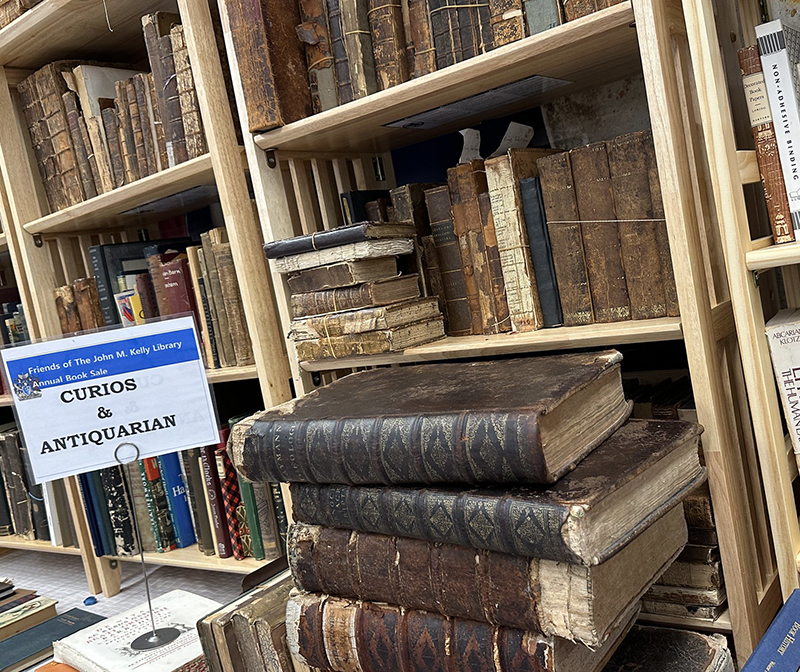
Open to all undergraduate students in the Faculty of Arts and Science at the University of Toronto, this interdisciplinary program examines the role of books and other media in culture and society. Students study book production, illustration, advertising, censorship, theory and contemporary media. The St. Michael’s Print Room and U of T’s library system offer unique, hands-on learning opportunities.
Through a global lens, students explore the influence of media across history—from early radio broadcasts to today’s digital platforms—on how we understand the world, ourselves and our relationships with others. Graduates pursue careers in journalism, publishing, editing and communications, or further study in fields like information and library science. The program also introduces students to themes in the Book History and Print Culture graduate program at U of T.
Arts & Science Internship Program
If you are entering second year and enrolled in the Book & Media Studies Major, you may apply to the Arts & Science Internship Program (ASIP stream). The program combines 12 to 20 months of paid work experience with professional training. In exceptional cases, including for transfer students, those admitted to the major after Year 2 may also qualify in Fall of Year 3.
Course highlights
The Printed Book
In this year-long seminar, students study the development of movable type and the book as a communication technology. They learn about the societal impact of printing and use 19th- and 20th-century presses to produce their own letterpress materials.
Book and Media Histories
This course traces the evolution of communication—from orality and print to sound, image and digital media. Students explore how various technologies have shaped and been shaped by culture and society.
Social Media and Digital Platforms
Students explore how social media and networked technologies influence identity, behaviour and culture—and how these tools are, in turn, shaped by users. Topics include political, economic and social impacts.
Media Ethics
This course examines ethical issues in mainstream and alternative media. Students consider journalistic principles like objectivity and minimizing harm in the context of a global media environment shaped by both professionals and everyday users.
Advertising and Media
Students investigate the roles of advertising, branding and marketing in shaping values and ideologies. Through critical analysis of advertisements, they explore the social, cultural, economic and environmental effects of advertising.
Histories of Letterpress Printing
Framed by the apprenticeship model of early printing trades, this course guides students through all stages of letterpress production. It also explores social issues in printing, such as working conditions and the rise of guilds.
Media and Environmental Justice
Focusing on the field of ecomedia, this course investigates how media technologies and narratives contribute to or challenge environmental crises. Students apply a decolonial lens and critical literacy skills to imagine how media can advance environmental justice.
The Game Industry
Students analyze the commercial game industry through a critical lens, examining issues such as corporate consolidation, labour practices, discrimination and independent game cultures. Topics are approached from media, game and cultural studies perspectives.
St. Michael’s College Undergraduate Courses 2025-2026
Courses and room assignments can be found on the Timetable Builder.
BMS100H1F and S: Introduction to Book & Media Studies
Time(s): Wednesday 13:00-15:00
Instructor(s): Felan Parker
Introduces the academic study of media in all its forms, including books and print media as well as modern electronic and digital media. Provides an overview of key theories of media, culture, and society and relates them to contemporary issues, enabling students to apply different critical approaches to their everyday experiences with media.
BMS110Y1Y: The Printed Book
Time(s): Thursday 13:00-15:00
Instructor(s): Kit MacNeil
In this full-year seminar, students will learn about the revived art of letterpress printing. Starting with a historical overview of the printing itself—from the development of movable type onwards—and its massive impact on society, this course will teach students about the importance of printing, the development of the book as technology, and their power, then and now, to shape humanity. Topics covered will include the development of movable type and of the printing press, the emergence of books as a form of knowledge transmission, and the way both have affected the way we live our lives. Students will have an opportunity to produce printed materials using 19th and 20th century printing presses.
BMS200Y1Y: Book & Media Histories
Time(s): Tuesday 11:00-13:00
Instructor(s): Francesco Morriello
Traces the long history of media in culture and society, including books and other communication technologies. Covers historical developments including orality and writing, printing and the book, image and sound reproduction, wired and wireless communication, electronic and broadcast media, and contemporary digital media. Examples and case studies will be drawn from a variety of different sociocultural contexts, media industries, and creative practices.
BMS201H1F and S: Information Literacy, Writing, and Research for Book & Media Studies
Time(s): Thursday 9:00-11:00
Instructor(s): Stacy Reardon
Develops foundational skills for students in Book & Media Studies, including academic writing, information literacy, media literacy, citation, qualitative and quantitative research, primary and secondary sources, library resources, and practical techniques for analyzing different forms of media.
BMS301H1S LEC0101: Food and Media
Time(s): Monday 11:00-13:00
Instructor(s): Xianwei Wu
This course explores the ever-growing field of food studies in media, as our relationship with food becomes increasingly mediated, food as an indispensable part of human existence has become a reflection of our society at large. For this class, we will examine the history of food production as they are represented in print media through recipe books, newspapers and advertisements, as well as the modern iterations of food media including food photography, cooking shows, and social media food contents. We will examine the understanding of food through a wide range of socio-cultural issues, including health and dieting, class and labor, gender and sexuality, race and diaspora, and the commercialization of food related contents. This class will be a seminar format that requires active participation and presentations, cooking ability is not necessary but welcomed.
BMS301H1S LEC0201: Combat in Media and Art
Time(s): Monday 15:00-17:00
Instructor(s): John Zilcosky
This course offers a historical exploration of the relationship between art and physical combat as represented and/or enacted in various media. Taking as its subject ancient artefacts, literature, painting, and film from a variety of cultures and historical moments, this course asks what representations of combat say about why humans engage in combat sports. It also explores and analyses the forms through which this combat itself is enacted – whether in wooded glades; on small, confined stages; in tents; or through a variety of televisual and cinematic media – to delve into the implications of meaning, media, and communal ritual in a variety of historical and contemporary contexts.
BMS301H1S LEC0301: Minority Language and Media
Time(s): Tuesday 11:00-13:00
Instructor(s): Pa Sheehan
This course will be focusing on media in the following minority languages within the branch of Celtic languages; Irish, Scottish Gaelic, Welsh, Breton (all continously living), Cornish and Manx (recently revived). Since the establishent of Raidió na Gaeltachta (Irish language) in 1972 up until the launch of BBC Alba (Scottish Gaelic) in 2008, various radio stations and television chaennels broadcasting exclusively or predominantly in these minority languages have been actualised. This course will explore their objectives, successes and failures as well as examining how the languages themselves have been impacted by the increased exposure.
BMS314H1S: Media Revolutions
Time(s): Tuesday 9:00-11:00
Instructor(s): Paolo Granata
This class offers a deeper examination of the intersections of technology and human thought, perception and culture. The advent of new media technologies, from literacy through to social media, will be examined as revolutions in technology, semantic fields of cultural meaning-making and human action. Students gain a strong focus on technological advancements as insights into cross-cultural change at significant turning points in book and media history.
BMS316H1F and S: Social Media & Digital Platforms
Time(s): F: Tuesday 11:00-13:00, S: Thursday 13:00-15:00
Instructor(s): Xianwei Wu
Social media, digital platforms, and networked technologies are deeply embedded in our contemporary lives, both shaping and shaped by users. But what are their social, cultural, political, and economic impacts? What consequences do they have for how we think, feel, socialize, work, play, and understand ourselves? Students in this course will explore, examine, and debate these questions with reference to their everyday experiences and current examples.
BMS331H1 F and S: The History of the Book: Elements of Bibliography and Print Culture
Time(s): F: Wednesday 11:00-1:00, S: Wednesday 13:00-15:00
Instructor(s): TBA
An exploration of the history of the book from ancient inscriptions to e-books. This course develops an awareness of the interplay between material object and conceptual categories in book history by focusing on significant episodes in the evolution of the book as a medium, such as the rise of the context and the introduction of print. This course also delves in the practices of bibliography, the features of typography, and the material details of the printing process, while also highlighting the interdisciplinary nature of book history from a global perspective. Typically, this course will involve in-person workshops and visits to print studios and rare books collections on campus.
BMS332H1F: The History of Reading: Readers, Readerships, Reception
Time(s): Friday 13:00-15:00
Instructor(s): TBA
This course explores the history of reading. Attention is given to the pivotal episodes in this history with a focus on its changing modes and shifting cultural significance. By surveying the habits, institutions, and aims of reading, students in this course will gain a greater understanding of its rich history and its complex evolution, and will enable them to reflect on the critical place of reading in their daily lives.
BMS351H1S: The Illustrated Dante
Time(s): Wednesday 11:00-13:00
Instructor(s): Giulia Gaimari
This course will explore the multifaceted relationship between text, image, and culture from late medieval illuminated manuscripts up to the present day through an examination of illustrated versions of Dante’s Divine Comedy. As early as the fourteenth century and into the present day, the reading and reception of Dante Alighieri’s Divine Comedy has been tied to its presentation in illustration. Students will also study how engagements with Dante’s poem have given life to visual responses and creative re-elaborations.
BMS353H1F: Fandom, Fan Fiction, and Participatory Culture
Time(s): Thursday 13:00-15:00
Instructor(s): Xianwei Wu
In this course, students will explore the idea of fandom, the history of fandom and fandom scholarship, fan activities across the globe, and what it means to be a fan. By applying the broad conceptual frame of participatory culture, the course will examine a wide range of fan creations. It will also examine the evolution of fan interaction with the objects of fandom, with the media industry, and with society at large. Students will have the opportunity to explore and create some fan artefacts of their own, and in the process, to dive deep into the complex world of fandom.
BMS354H1S: Transnationalism and East Asian Media
Time(s): Tuesday 11:00-13:00
Instructor(s): Xianwei Wu
This course examines East Asian media industries and cultures in a transnational context. Topics to be explored include media production, distribution, reception, and regulation; representation, identity, and nationhood; cross-cultural exchange; and the global circulation of East Asian media. Media and cultural forms examined may include print media, film, television, radio, news media, popular music, animation, comics, video games, digital media, and social media.
BMS386H1F and S: Book and Media Internship
Credit is offered to a student doing an internship with a media organization. A faculty supervisor assesses and assigns the necessary written component cognate to the internship. Students are responsible for securing their own internship. A description of the internship, working bibliography, marking scheme, and academic supervisor’s support must be submitted for approval by the Program Coordinator and Director. More information and application forms are available at https://stmikes.utoronto.ca/bms-internship-form or from the SMC Principal’s Office, smc.programs@utoronto.ca. Enrolment in this course is intended for Book and Media Studies Majors not enrolled in the Arts & Science Internship (ASIP) stream of the program. Not eligible for CR/NCR option.
BMS387H1F: Advertising and Media
Time(s): Thursday 11:00-13:00
Instructor(s): Felan Parker
This course presents a critical media studies approach to advertising and consumer culture, past and present. Advertising, marketing, branding, and promotion play a central role in capitalist societies and media industries, reflecting and refracting dominant cultural attitudes and ideologies. How does advertising shape what and how we consume? What are its social, cultural, economic, and environmental impacts? Students will learn to analyze the form, content, and ideology of advertisements, and think critically about the advertising they are subjected to in everyday life.
BMS389H1F: Libraries, Special Collections, and Archives
Time(s): Monday 11:00-13:00
Instructor(s): TBA
This course takes a hands-on approach to introduce students to different types of printed and manuscript primary and secondary sources. Students will learn to apply information literacy concepts, and library and archival theories to the analysis, critique, evaluation, and use of materials drawn from the University of Toronto’s collections of library, rare book, and archival materials. This course will touch on current topics within information literacy, including, but not limited to, digitization, the ethical collection and use of oral and written information; post-colonial practices; racial, cultural, and gender representations; and archival neutrality.
BMS391H1S: The Media Franchise
Time(s): Thursday 11:00-13:00
Instructor(s): Felan Parker
Reflective of the broader logics of media convergence, media franchises spread their commercial interests and imaginary worlds across many multiple media. For media industries, franchises maximize profits by linking together movies, TV series, books, comics, games, toys, merchandise, and promotional paratexts to encourage consumption. At the same time, they are a platform for new forms of serial narrative, world-building, and transmedia storytelling, and generate vibrant, diverse fan cultures that are sometimes at odds with franchise producers. Drawing on a wide range of scholarly and critical work, this course examines popular media franchises from historical, economic/industrial, formal/aesthetic, and sociocultural perspectives.
BMS393H1F: Media Ecology
Time(s): Tuesday 9:00-11:00
Instructor(s): Paolo Granata
This course presents an advanced introduction to Media Ecology, an interdisciplinary field of inquiry which examines how media environments affect human affairs, understanding, feelings, and values. Building on the assigned readings, students will examine the various theories of Media Ecology, honing their skills of assessment, analysis, criticism, and reflection. An interdisciplinary approach informed by literature, philosophy, anthropology, semiotics, aesthetics, and history will provide students with the opportunity to critically evaluate some crucial and controversial issues facing contemporary society.
BMS394H1F and S: Independent Study in Book and Media Studies
An independent research project to be proposed by the student and supervised by a full-time faculty member affiliated with the Book & Media Studies Program. A full proposal including a course description, working bibliography, marking scheme, and approval from your academic supervisor must be submitted for approval by the Program Coordinator and Director. More information and application forms are available at https://stmikes.utoronto.ca/academic-forms or from the SMC Principal’s Office, smc.programs@utoronto.ca. Completed forms must be submitted to the Principal’s Office by the first day of classes in September/May for F courses, or January/July for S courses. Meeting times are determined in consultation with your supervisor, and may be in person or online as appropriate. Students must have approval of an instructor willing to supervise the project. Final approval is granted by the program director. Not eligible for CR/NCR option.
BMS395Y1Y: Independent Study in Book and Media Studies
An independent research project to be proposed by the student and supervised by a full-time faculty member affiliated with the Book & Media Studies Program. A full proposal including a course description, working bibliography, marking scheme, and approval from your academic supervisor must be submitted for approval by the Program Coordinator and Director. More information and application forms are available at https://stmikes.utoronto.ca/academic-forms or from the SMC Principal’s Office, smc.programs@utoronto.ca. Completed forms must be submitted to the Principal’s Office by the first day of classes in September/May for F courses, or January/July for S courses. Meeting times are determined in consultation with your supervisor, and may be in person or online as appropriate. Students must have approval of an instructor willing to supervise the project. Final approval is granted by the program director. Not eligible for CR/NCR option.
SMC380H1F and S: St. Michael’s College Independent Studies
An opportunity for students to pursue an independent course of study not otherwise available in the Faculty of Arts and Science. A full proposal including a course description, working bibliography, marking scheme, and approval from your academic supervisor must be submitted for approval by the SMC Principal. More information and application forms are available at https://stmikes.utoronto.ca/academic-forms or from the SMC Principal’s Office, smc.programs@utoronto.ca. Completed forms must be submitted to the Principal’s Office by the first day of classes in September/May for F courses, or January/July for S courses. Meeting times are determined in consultation with your supervisor, and may be in person or online as appropriate. Not eligible for CR/NCR option.
SMC381Y1Y: St. Michael’s College Independent Studies
An opportunity for students to pursue an independent course of study not otherwise available in the Faculty of Arts and Science. A full proposal including a course description, working bibliography, marking scheme, and approval from your academic supervisor must be submitted for approval by the SMC Principal. More information and application forms are available at https://stmikes.utoronto.ca/academic-forms or from the SMC Principal’s Office, smc.programs@utoronto.ca. Completed forms must be submitted to the Principal’s Office by the first day of classes in September/May for F courses, or January/July for S courses. Meeting times are determined in consultation with your supervisor, and may be in person or online as appropriate. Not eligible for CR/NCR option.
BMS401H1F LEC0101: Media and Censorship
Time(s): Monday 11:00-13:00
Instructor(s): Xianwei Wu
With the rapid rise of digital technology, our understanding of censorship is also quickly changing, terms like “cancel culture”, “wokeness”, even “fake news” have been increasingly used to connote some kind of censorship to different groups of people, pointing to the conceptual fluidity of the term. The practice of censorship has taken on countless forms throughout history and across cultures. This class will provide a theoretical overview of the multiple understandings of censorship, including censorship’s relationship to media technology, to our understanding of free speech, to institutional control, and even as a form of creativity. The purpose of the class is to use a research-based approach to develop a more nuanced and critical understanding of what censorship means to our current cultural moment.
BMS401H1F LEC0201: Trump and the Media
Time(s): Friday 11:00-13:00
Instructor(s): TBA
TBA
BMS401H1S LEC0101: The Book as a Visual Object
Time(s): Monday 9:00-11:00
Instructor(s): Paolo Granata
TBA
BMS401H1S LEC0201: Journals as notebooks: print history, time management and the industry of self-documentation
Time(s): Friday 11:00-13:00
Instructor(s): Simon Rogers
This course will investigate the idea of self-identity and the documentation of daily experience in the form of journals, day planners, diaries, scrapbooks, notebooks and other commonplace personal recordkeeping systems throughout the ages. Students will examine first-person recordkeeping practices in archival records and the production of time management systems, journal-keeping conventions, and notation systems, as reflected in historical and contemporary practices and technologies. A high level of interest in stationary, while not strictly mandatory, may be beneficial to students enrolling in this course.
BMS401H1F LEC5101: Animated Film in Europe
Time(s): Wednesday 17:00-20:00
Instructor(s): Laura Pontieri
Trends in the history of European animated film, focusing on Central and Eastern European cinematic traditions. Aesthetics of animated image and peculiarities of animation as an art form. Films are analyzed in their artistic, cultural and political contexts. Taught in English, English subtitles.
BMS402H1F LEC0101: The Power of Print
Time(s): Thursday 9:00-12:00
Instructor(s): Kit MacNeil
The Power of Print In this seminar course, students will learn about the lasting impact of print media as it resonates throughout the disciplines of art history, book history, and contemporary society. From prehistoric stencils to Japanese woodblock prints to contemporary zines, print media has had a lasting impact on global cultures and the transmission of knowledge throughout history. Through hands-on workshops, students will get to experiment with a variety of print technologies, learning about their significance in specific industries and cultural moments. Assignments will be rooted in research creation methodologies, allowing students to create and engage with print media first hand.
BMS402H1S LEC0101: Aldus Manutius and the rise of the modern book
Time(s): Tuesday 13:00-15:00
Instructor(s): Paolo Granata
This advanced seminar explores Aldus Manutius’ impact on Renaissance print culture and the modern book. As a scholar and knowledge gatekeeper, he pioneered the octavo format, italic type, and classical editions, shaping the rising publishing industry. Through primary source analysis and hands-on experiential learning activities at Trinity College Library and Fisher Library, students will engage with early printed books and incunabula, including Hypnerotomachia Poliphili and Aldine editions.
BMS411H1F LEC0101: AI Literacy
Time(s): Monday 9:00-11:00
Instructor(s): Paolo Granata
This advanced seminar explores the fundamentals of Artificial Intelligence, its diverse applications, the implications it holds for contemporary society, and the transformative impact on cultural and media landscapes. It is designed to equip students with essential insights and practical skills for understanding and engaging with AI. Utilizing cutting-edge AI tools and a specialized Large Language Models, students will experience a unique educational approach, learning about AI through direct interaction with AI technologies.
BMS420H1S: Bookbinding Then and Now
Time(s): Tuesday 9:00-11:00
Instructor(s): Kit MacNeil
A survey of the history and development of bookbinding technologies from the sixteenth century to the modern day. Through a combination of lectures and tutorials, this course will explore how the construction of books as physical objects has influenced the transmission of knowledge and the development of society. Special attention is paid to binding structures. Students will have an opportunity to fabricate book objects.
BMS421H1F and S: Histories of Letterpress Printing
Time(s): F: Tuesday 9:00-12:00, S: Thursday 9:00-12:00
Instructor(s): Kit MacNeil
In this senior seminar course, students will have a hands-on opportunity to learn about the Western letterpress tradition from its fifteenth century emergence to its nineteenth century rise as an industrial trade. Framed by the apprenticeship model that supported the growth of printers as a trade, where apprentices would train under a master to become a journeyman, this course will expose students to all steps involved in producing letterpress materials set within a historical context. Social issues associated with the printing industries, such as working conditions and the rise of guilds, will also be explored. Students will have an opportunity to produce printed materials using 19th and 20th century printing presses.
BMS431H1S: Media and Environmental Justice
Time(s): Friday 13:00-15:00
Instructor(s): TBA
This course explores the relatively new field of ecomedia to consider how media technologies, mainstream media practices and dominant media narratives intersect and contribute to global environmental crises. Students will engage in individual and collaborative qualitative and experiential research methods to apply critical media literacy skills and decolonial lenses to reimagine how contemporary media practices can promote environmental justice and/or cultivate a reparative eco-consciousness on individual and collective levels.
BMS433H1S: Video Games and Culture
Time(s): Tuesday 13:00-15:00
Instructor(s): Felan Parker
From early mainframe computers to arcades, home video game consoles, mobile devices, VR, and beyond, digital games have become increasingly central within contemporary culture. Why do we make and play games? How do games produce experiences, make meaning, and reflect or refract ideology, and what impact do they have on players? Who gets to make, play, and find representation in games, and who is left out? What role do games play in the contemporary media ecosystem? Through scholarly research and interactive examples, this seminar-style class will explore digital games and culture from a variety of critical perspectives, including history, industry, technology, culture, politics, and aesthetics. No previous experience or expertise with video games is required.
BMS494H1F and S: Independent Study in Book and Media Studies
An independent research project to be proposed by the student and supervised by a full-time faculty member affiliated with the Book & Media Studies Program. A full proposal including a course description, working bibliography, marking scheme, and approval from your academic supervisor must be submitted for approval by the Program Coordinator and Director. More information and application forms are available at https://stmikes.utoronto.ca/academic-forms or from the SMC Principal’s Office, smc.programs@utoronto.ca. Completed forms must be submitted to the Principal’s Office by the first day of classes in September/May for F courses, or January/July for S courses. Meeting times are determined in consultation with your supervisor, and may be in person or online as appropriate. Students must have approval of an instructor willing to supervise the project. Final approval is granted by the program director. Not eligible for CR/NCR option.
BMS495Y1Y: Independent Study in Book and Media Studies
An independent research project to be proposed by the student and supervised by a full-time faculty member affiliated with the Book & Media Studies Program. A full proposal including a course description, working bibliography, marking scheme, and approval from your academic supervisor must be submitted for approval by the Program Coordinator and Director. More information and application forms are available at https://stmikes.utoronto.ca/academic-forms or from the SMC Principal’s Office, smc.programs@utoronto.ca. Completed forms must be submitted to the Principal’s Office by the first day of classes in September/May for F courses, or January/July for S courses. Meeting times are determined in consultation with your supervisor, and may be in person or online as appropriate. Students must have approval of an instructor willing to supervise the project. Final approval is granted by the program director. Not eligible for CR/NCR option.
SMC480H1F and S: St. Michael’s College Independent Studies
An opportunity for students to pursue an independent course of study not otherwise available in the Faculty of Arts and Science. A full proposal including a course description, working bibliography, marking scheme, and approval from your academic supervisor must be submitted for approval by the SMC Principal. More information and application forms are available at https://stmikes.utoronto.ca/academic-forms or from the SMC Principal’s Office, smc.programs@utoronto.ca. Completed forms must be submitted to the Principal’s Office by the first day of classes in September/May for F courses, or January/July for S courses. Meeting times are determined in consultation with your supervisor, and may be in person or online as appropriate. Not eligible for CR/NCR option.
SMC481Y1Y: St. Michael’s College Independent Studies
An opportunity for students to pursue an independent course of study not otherwise available in the Faculty of Arts and Science. A full proposal including a course description, working bibliography, marking scheme, and approval from your academic supervisor must be submitted for approval by the SMC Principal. More information and application forms are available at https://stmikes.utoronto.ca/academic-forms or from the SMC Principal’s Office, smc.programs@utoronto.ca. Completed forms must be submitted to the Principal’s Office by the first day of classes in September/May for F courses, or January/July for S courses. Meeting times are determined in consultation with your supervisor, and may be in person or online as appropriate. Not eligible for CR/NCR option.